
Why Travelling is Good for You: Benefits of Travel




See travel as medicine
There are countless reasons why travel is good for you and science increasingly backs up what seasoned travellers have long felt instinctively.
Whether you’re getting lost in the alleyways of Tokyo, exploring Mexico City’s markets or discovering Lisbon by tram, travel is one of the best things you can do for your mental and physical well-being. New sights, streets, sounds, light, smells, tastes – it’s the newness that’s so beneficial.
The benefits of travelling aren't just mental. Being in an unfamiliar environment prompts your brain to form new neural pathways, sharpening your attention and boosting your mood in ways that routine cannot replicate.
You might also find yourself thinking more creatively, as the mental fatigue that builds from your regular routine and surroundings begins to dissolve.


Make the most of the build-up
If you’ve ever counted down to a long-awaited holiday, you’ll know the build-up to departure is the most exciting part of the trip.
In psychological terms, this kind of anticipatory happiness or savouring comes from having something to look forward to. Research suggests the brain releases dopamine in response to an anticipated reward, which is why the weeks before your holiday can feel as charged as the event itself.
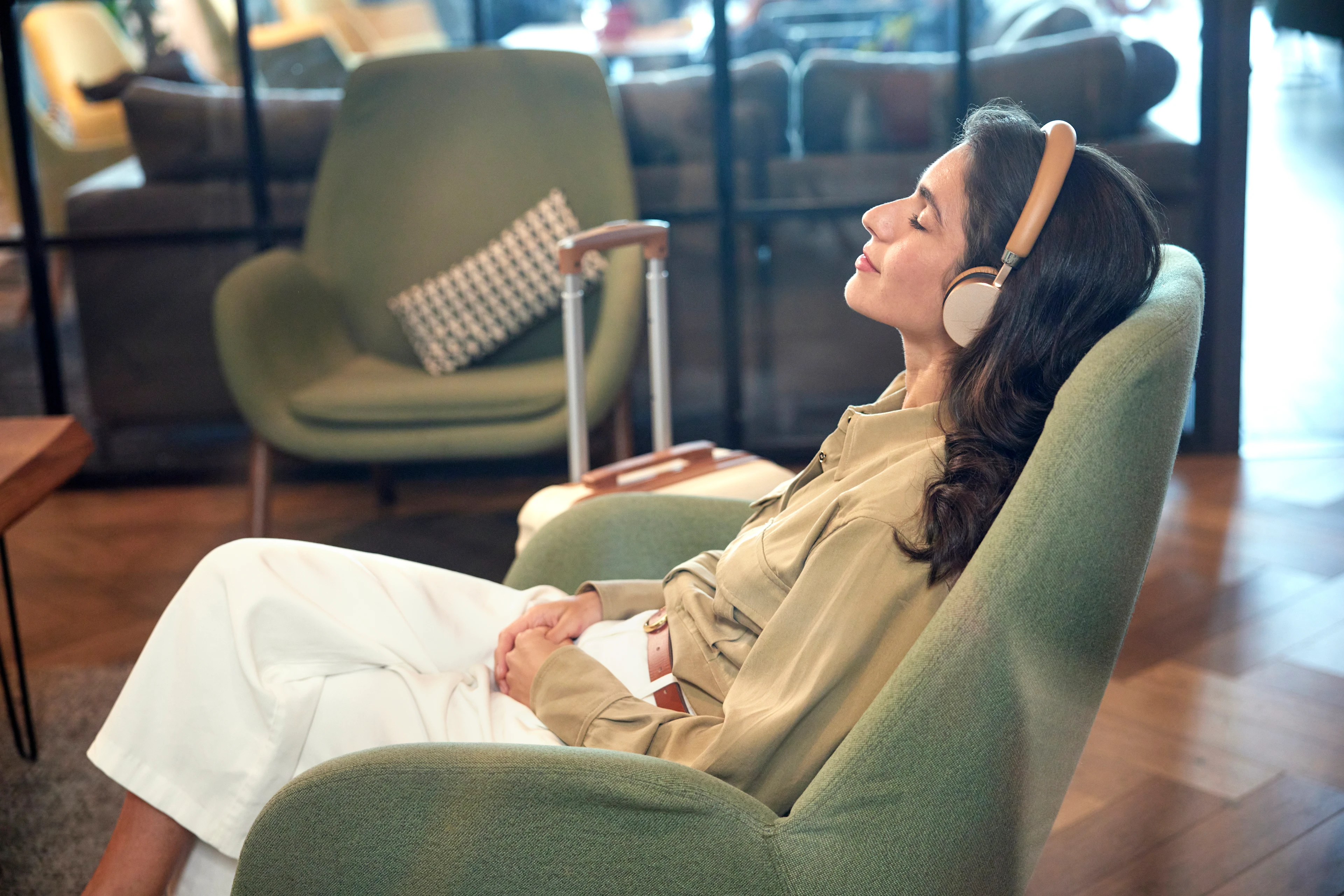
But excitement can easily tip into anxiety. TrvlWell’s guided meditations, mobility routines and sleep tools can help calm pre-travel anxiety in the weeks and days leading up to departure, so you arrive at your destination rested and ready for your holiday.




Move more throughout your journey
There’s a reason the streets of Copenhagen feel different on foot than from the window of a taxi, or why a morning walk through Buenos Aires’ Palermo neighbourhood reveals a city no itinerary could have predicted – the corner bakery, the impromptu street market, the quality of light between buildings.
Walking is the oldest and most reliable way to truly inhabit a place rather than merely visit it, and science supports what you may have already experienced. The health benefits of active travel include better memory memory, sharper sensory perception and improved mood through the sustained release of endorphins.
Movement on long-haul flights, while more restricted and significantly less exciting than wandering through a new neighbourhood, is beneficial too.
Prolonged sitting increases fatigue, disrupts circulation and compounds the cognitive fog of crossing multiple time zones. Simple in-seat movement using the TrvlWell app, combined with frequent trips around the cabin, can help you arrive feeling fresher.



Rewire your brain with new discoveries
Strolling the backstreets of Barcelona or meandering through the medinas of Marrakech isn’t just pleasurable – it’s good for your brain. The mental health benefits of travel are real and lasting.
Confronted with novelty, such as a language it doesn’t recognise, a flavour it hasn’t encountered or a street plan that follows no familiar logic, the brain responds with a surge of dopamine, the neurochemical most associated with curiosity, reward and the drive to explore further.
This is why the first day in an unknown city feels so vivid, and why those memories tend to outlast those formed in familiar surroundings. Novelty forces the brain to pay attention, encoding the experience more deeply in the process. Neuroscientists call this effect neuroplasticity – the brain’s capacity to rewire itself in response to new stimuli – and travel is one of its most potent triggers.
While a holiday undoubtedly has physical and mental benefits, the benefits of travel can be diminished by factors such as jet lag and poor sleep. TrvlWell brings together guided meditations, mobility routines and sleep tools designed to support each stage of your journey, from the excitement before departure to settling into a new destination.